The first question is about the distinction you make between. The end of the Cold War, the demise of the power of the Communist Party, and the collapse of the Soviet Union. And you say that one of the reasons why a lot of people don't understand the events back then is a tendency to conflate these three events. And these people identify the US as the winner of the Cold War and as the main driver by both the demise of communism and the collapse of the Soviet Union. Why is it important to make a distinction between these three events? I think it is very important. In fact, in the space of just a few years, about three years, I think three important things happened. First of all, we ended the Cold War not by the victory of one side over the other, but by negotiation. It was in the interest of the Soviet Union as well as that of the United States and the rest of the world. And the reason we were able to end it was that Gorbachev abandoned the Marxist ideology which had motivated the party and the whole structure of foreign policy of the Soviet Union. Before Gorbachev, it had been Assumed that the Soviet Union was in the vanguard of a Marxist Leninist revolution, which would cover the earth and eventually create first what they called socialism. By the way, it was not socialism in my view, it was a state monopoly capitalism. But beside the point, that was the label, and it was supposed to Evolve into communism and have the whole state structure disappear. Well, obviously, that was not happening, just the opposite was happening. But Gorbachev understood that he had to move the Soviet Union off the monopoly control of the Communist Party. By the way, this is quite a paradox that Gorbachev, as a general secretary of The Communist Party took steps to take it out of power. I think this is something people don't understand. So the first thing to remember that this was not a victory of the West. Second, the reason the Soviet Union broke up was because of internal factors. If the Cold War had continued and the arms race had continued, It would have been impossible for Gorbachev to begin to liberalize. The third thing I would say is that the United States did not want the Soviet Union to break up. In fact, we only insisted that the three Baltic states be granted their independence. We had never recognized they were part of the Soviet Union. We had recognized that the other 12 Soviet republics were part of the Soviet Union. And so it was not American or NATO policy to break up the Soviet Union. Yes, to liberate the Baltic states, but not the Soviet Union. And one thing people forget Now, when they talk about Russia is always imperialist and things like that, is that the elected leader of Russia, Boris Yeltsin, was the one who led the breakup of the Soviet Union. Also, as far as the three Baltic countries are concerned, one of the last acts of the Soviet Union when Gorbachev was president was to recognize their freedom and that they were not part of the Soviet Union. So that was not caused by the breakup of the Soviet Union, but authorized by them. Now, why is this important? Because later people start saying, well, they lost the Cold War, Russia is a loser. And I'd say most important, we started expanding NATO. Now, the reason that was, I think, a fundamental error and is at the root of many of our problems now is that NATO had been conceived as a defensive alliance. But once the Soviet Union had collapsed and Russia was less than half its population and was no threat to anybody, then we began expanding NATO and using it against countries that had not attacked it, we accuse President Putin of breaking international law and invading Ukraine. It is true, this is a horrible thing, and this war is not in the interest of Ukraine or Russia. But let's be frank the United States and its NATO allies have set a precedent for everything Putin has done, and I'd say with less reason. But that's another story.
What precedents are you talking about? Is that Serbia in 1999, Iraq in 2003, and maybe Libya in 2011? Yes. I think that, of course, NATO's military attack on Serbia was because of actions that it was the Serbs were using violence against the Kosovars, the Albanian speaking Kosovars, who were actually in the 90s conducting a largely terrorist campaign. And so, actually, at that time, NATO began bombing Serbia without any provocation against any NATO allies. And when NATO had, in effect, occupied Kosovo, they recognized the independence of Kosovo despite the objections of Serbia. Now, the background of this is there had been an agreement, one that helped us in the Cold War, among the European countries, that there should be no changes of borders without the mutual consent of all the parties. But in the case of Kosovo, the Albanian dominated parliament voted to secede from Serbia, and this was recognized by the NATO powers. Now, later, when Putin occupied and held a referendum in the Crimea, the vote was overwhelming. And I don't think this was a forced vote because it was overwhelming that Crimea, the people wanted to be part of Russia rather than Ukraine. There were good reasons for this on their part. The population was majority Russian with a minority of the Turkic speaking people. People in the Crimea. It had never historically been part of Ukraine, but had been part of Russia from the 18th century when Catherine the Great invaded the area and absorbed it into Russia. I could go on about this, but the fact is that we had set a precedent, I would say Territory and changing borders in the case of Serbia, and I would say with less legality than the action of Russia in taking Crimea. Now, let's also go back. What about the other borders of Ukraine? These borders were not traditional borders. The border, you know, Ukraine in both Ukrainian and Russian. Means on the border, and there's no implication of which side of the border. So it was always a border area and traditionally within other states. But an agreement by Hitler and Stalin just before the Second World War broke out made the borders of all except Crimea. And in so doing, they took in an area in Western Ukraine around Lviv, which had never been part of the Russian Empire. It had been part of the Austro Hungarian Empire, and then after World War I, made part of Poland. And it was an area where during World War II there had been massive, I would say, massive pogroms and extermination of minorities, Jews and other minorities. Carried out not by the Nazis, but by pro Nazi elements in that area. Now, once that was taken in the Soviet Union and after World War II, there were rebellions there supported by the U.S. for a while, but the people there were very much suppressed by the communist regime, The Uniate Church, for the most part, which is a church that retained the Orthodox procedures but recognized the Pope. And this had been the result of the Counter Reformation when this occurred under the Austro Hungarian Empire. So, this is an area which the basic culture Was different. It was also Ukrainian, yes, but the language actually was rather different. And in the East, at the time Ukraine became independent, about the majority of the people, particularly in the Donbass, spoke Russian and they considered themselves for the most part, Ukrainians who spoke Russian. In other words, You could be part of what was considered Ukraine at that time, you might say a province of Russia, but you could also speak another language. And under Soviet periods, I must say, although the Soviet Union tried to enforce an ideological conformity, as long as there was ideological conformity, they promoted these non Russian languages. And the idea that they always tried Russification is simply not historically true. So, in effect, what the West has done is, in effect, posing for Russia by attempting to bring Ukraine into NATO. They are posing what Russia can only see as a threat and particularly since after they expanded NATO into Eastern Europe, which at first Russia did not oppose, but what they especially opposed was Western bases in those countries. And when they agreed, when the Soviet Union, Gorbachev agreed to the unification of Germany, in that treaty was a provision that there could be, there should be no foreign troops stationed there or any nuclear weapons. This was in a treaty. The whole thing was negotiated with the assumption that there would be no expansion of NATO. That came up only later. But when people now say that, well, that was not the main problem, they're absolutely wrong. That is the main problem. And particularly when the expansion of NATO involved moving bases into those East European countries. That came up particularly during the Obama administration when there were plans to put ballistic missiles in Poland and Romania. Now, I think this was seen as threatening. And the reason given was we had to protect Western Europe from Iran. For Iran to attack Western Europe, no reason for them to do so. I mean, it was sort of an absurd thing. But we didn't announce that those missiles, well, they were anti ballistic missiles. With a change of software, these missiles could be used offensively. And this was the very thing that earlier had been prohibited under one of the arms control agreements that we negotiated to end the Cold War. Let me also add That from the 2000s on, the United States in the second Bush administration began to walk out of all the basic arms control agreements that we had made to end the Cold War. And this didn't end at the same time when President Medvedev, who for four years was The president of Russia and kept asking for an all European security pact. This was simply turned down. One final point I would make is that when the people in the Donbass reacted to an attempt by the Ukrainian government to deprive Russian speakers of full citizenship rights, they began To rebel with some help from Russia. That's true. But an agreement at that time when the fighting started was that President Putin had agreed with the Ukrainian government and also the French and German governments that there would be in effect a ceasefire, and that the Donbass republics, Lugansk and Dnipro, would be granted autonomy, and that the Russian language would be restored as one of the official languages in Ukraine, as it had been at the time of their independence. Well, actually, the United States and other NATO countries began to give Ukraine what they call defensive weapons. Let me say that if Ukraine had been a member of NATO, that was exactly what would have been the obligation of those. In other words, we began to treat Ukraine as if it was a NATO member, even though we had been warned repeatedly. That was unacceptable. Well, finally, and I think your other question regarding the Cuban Missile Crisis that precedent was, it happened during what we call the Cuban Missile Crisis. I was a junior officer in our embassy in Moscow at that time, and I actually translated some of the messages between Khrushchev. The then Soviet leader, and President Kennedy. But looking back at that, and what happened was that the United States had, early in the Kennedy administration, had tried to sponsor an invasion of Cuba, actually by Cuban exiles, which we had trained. And they were not successful. The Cuban government asked the Soviet Union for intermediate range nuclear weapons in order to defend themselves. Now, of course, that was done secretly, but by overflights, we found what was happening and demanded that they remove them. Well, at first, there was a denial that they were there And things were very dicey. But eventually, both leaders recognized how close they were and they backed down. But one thing about that, as we look back now, was yes, we required Khrushchev not only to remove the nuclear weapons, but to announce publicly he was doing so and to do so under our surveillance. At the same time, as he pointed out, we had secretly, though of course they knew it, placed nuclear weapons in Turkey, which could reach the Soviet Union. And yes, Kennedy agreed secretly that yes, we will remove them, but we will not announce it. In other words, we forced him to look as if he was backing down when in fact it was a deal. People involved in that got together to discuss it, and this happened twice. What we found out was that we came very close to a nuclear exchange. At one point, one of our destroyers was keeping a Soviet submarine, which had nuclear torpedoes, from surfacing And itturned out the commander of that decided that he would use a nuclear torpedo on that submarine, fortunately, the commander of the squadron, his superior, was on the same boat and countermanded it and said, No, we're not doing that. One can only wonder later. Of course, we didn't know that at the time. And we were very happy that we thought we had really faced them down. And later it turned out quite different. But I think that does show how we would have reacted if any foreign country, even those that were friends To us, attempted to put a military alliance of which we were not part on our border, and why that could not be understood by our American leaders and our European allies. I simply don't understand.
Do you think that is the lesson for the Ukrainian crisis today when you compare the Cuban Missile Crisis with the war in Ukraine? I do think that the combination of the anti-Russian policies of the Ukrainian government, which continued over that time, combined with the threat of Ukraine being part of the NATO alliance, yes, I think that was the motivating factor. And I think this policy of trying to isolate Russia because of that actually exacerbates everything. This was something that over the years during the Cold War, one of the main achievements and goals of our foreign policy and that of our NATO allies was to bring the Soviet Union, you might say, back into the community Of nations. And in fact, by 1991, we had what they called a Europe whole and free. And while Gorbachev was in charge, he also pointed out that the Soviet Union was a part of our common European home. We had that in the 90s. And it was precisely the NATO expansion that began to reverse that. And the fact that we simply reinforce the difference now, I think, is tragic and it's going to have tragic results for all of us.
I read your testimony to the Senate Foreign Relations Committee in 1997, and you said back then that if the U.S. pursues this path and expands NATO.It will go down in history as a major strategic blunder. Do you still stand by that assessment? Well, absolutely. That's what we're facing today. We are facing the fact that we have abandoned almost all of our nuclear reduction treaties.We have abandoned almost everything we did to end the Cold War, we Are conducting, in effect, a propaganda war along with an actual war against what is still a nuclear power. And I think that is extraordinarily dangerous, particularly when you combine it with what happened in the Middle East and the support that at least the United States has given to Israel to carry out what are clearly genocidal policies. And then, of course, the latest attack on Iran has, I think, been not only aggression, which was not a threat to the United States. And, of course, we have been trying to keep them from getting nuclear weapons. That George Shultz, when he, a former Secretary of State, I would say, the real motivating force in our policy that ended the Cold War, he conducted with many other specialists studies of the nuclear issues in the 1990s. And one of the studies that I was commissioned to do was to study countries that Had started a program about abandoning them. And one of the things that emerged from that is that these small countries do not try to get nuclear weapons to attack the United States or even to attack their neighbors. They get them because they don't want to be attacked. And the fact has been that when they gave them up, we will attack them. This happened in the case of Libya. It happened in the case of Iraq Claimed they were nuclear weapons when they had given them up. So, what are the other countries going to think? Now, North Korea refused to give them up. They have them. They're not there to attack the United States or anybody else. They're there to keep us from attacking them. And why people cannot understand this. And actually, there was an agreement during the Obama administration That would have made sure that Iran, at least for 10 years or more, could not really develop nuclear weapons because their nuclear program was under international controls and at least inspections, and we would know it. Of course, the first Trump administration threw that out, and also President Biden had pledged that We would reinstate it, he didn't. And so when we look at these issues, and then we have a president saying that we have to make sure forever they don't have them. I mean, we all know that Israel does have nuclear weapons. But if Iran or others, and I think now after this, we could be pretty sure that Iran will develop nuclear weapons or else get them from Allied nuclear power like Pakistan, which has them. And I think at the same time, if they do, Saudi Arabia and others may. Now, that's not the end of the world because all of these will be getting them as insurance against attacks against them. I think that's something one has to understand. And I think that the main danger to proliferation is that these can get out of responsible hands. Also, point to those that say that we must have a change of government in Russia. That one thing that President Putin has done was keep nuclear weapons under control. If he is removed, then there is no guarantee that his replacement would be as responsible. As a matter of fact, there are strong voices in Russia that are already pressing To use nuclear weapons, in as much as our NATO countries have been supplying weapons, including offensive weapons, to Ukraine. And, you know, again, I just don't understand how the leaders do not understand what a risk they are running and how it is not in their interest to cut Russia off. They are hurting themselves. I was just reading today that both Ukraine and Russia are major exporters of wheat. In fact, they have about 25% of the world exports. During the Soviet Union, the Soviet Union required an import of at least 28 million tons a year just to feed their people. This is one of the things which has been just basically changed. And I also say during the war Early on, there was an agreement that allowed the shipments out of Odessa. But once Ukraine started attacking Russian ports and Russian cities and Russian things, of course, Russia has begun retaliating. And now it, in fact, has cut off Odessa from exporting. In fact, recently, I think one of the Russian leaders said, well, if people, If Ukraine can't export its grain, we'll be happy to sell grain to others. But this idea that somehow you could bring them to their knees by these economic things, we are hurting ourselves. I mean, particularly the Europeans are. The United States never had that much vital trade with Russia. This, when, as I said, yes, any invasion of another country is a war crime. But unfortunately, our governments have given the Russian leader a precedent for almost everything he has done, at the same time, posing a clear military threat to his country. And this is particularly proven when Ukraine attacks facilities in Russia with weapons supplied by the West. And I mean, that's an offensive act by any definition. So I think clearly this is not going to bring good results for us.
You also said in your testimony, To the Senate in 1997, that you are a strong supporter of NATO and that NATO was established as a defensive alliance. Do you think that NATO still is primarily a defensive alliance? No, I think it has become an offensive alliance for the reasons that I've already said. And as I said, it was first used offensively against Serbia and then it was certainly used offensively against Libya. Now not all of our NATO allies supported the attack on Iraq but it is interesting now that the criticism that not only the Russian government but the German and French governments did not support our invasion of Iraq. Only our British friends did that. In fact, as we know now, they supported that even though they knew that the so called intelligence we had was not accurate. But now suddenly you have the Germans and the French among the most, I would say, fervent supporters of Ukraine. But I was just reading today that once again, President Zelensky has refused to call elections. He is the head of a government that became the government of Ukraine as a result of an illegal coup, one that was actually backed by the West. This is again something we forget. I mean, if any other country or combination of countries, Had organized a coup d'etat in Mexico City to have a different government, do you think the United States would have recognized it or would have sat still and let that happen? I mean, this is, I think, the one sidedness of looking at these things. And the problem is not that Vladimir Putin is a great leader or a great Democrat. He isn't. And he has, after he took over a bankrupt nation, And which had gone through a period of virtual anarchy in the 90s. He paid off the foreign debts and he brought some, I would say, he certainly improved the lives and the economy of Russia. But one of these conditions at that time was that the US, United States, and NATO not Try to detach any of the 12 former republics. He actually accepted the three Baltic countries in NATO. He didn't like it, but he didn't oppose it. But what he does oppose is bases there. And we started actually at one point putting a NATO base with rotating troops And Estonia, I believe. I mean, and this was totally contrary to everything we had understood with the Soviet Union, which was a much more powerful country than Russia.So, I mean, there are so many misunderstandings and people who talk about these issues without any regard to the history of them or the actual nature of those countries, know both Russian and Ukrainian, and I actually would do speeches in both. Always when I was ambassador or in charge of our embassy in Moscow, if I visited Ukraine and have a speech, I always delivered it in Ukrainian. And so, and I understand the history and the complexity of these, but to simply take the simplistic idea that somehow there is an obligation to defend borders that were designed By Hitler and Stalin is one of the, I think, the great ironies of our time.
You have said that the roots of the war in Ukraine have to do with NATO. What do you mean by that? Well, as I've said, no Russian government was going to feel secure by a foreign military alliance. Particularly one headed by the United States, controlling or being present in Ukraine, one which historically had been, most of it had been an integral part of Russia, and which government had step by step taken a virtually anti Russian attitude on many emotional and cultural issues. Reversing the original constitution. Also, when the Soviet Union broke up, there was an assumption that there was going to be an association, sort of a confederation of these states. I'm sure the people voting in Ukraine never anticipated closed borders with Russia, So much of their economy was connected with it. That I think have been misunderstood. But basically, I think it was quite appropriate for Ukraine and, in fact, Russia to hope to have a good trading relationship with the European Union. And Russia had never actually prohibited Ukraine from joining the European Union. What happened in 2014 was that the offer from the European Union was one that Ukraine could not at that time accommodate to. And in other words, it required a number of internal reforms, which were politically impossible. And it also offered far less in support than Putin did. Putin offered them sort of a multi billion dollar loan. And I would say throughout this period of Ukrainian independence, Ukraine had been receiving energy from Russia, mainly gas, at far below market prices and at times not paying for it. And so actually, at that time, the president wanted to negotiate a better agreement with the EU. But then there was violence and a coup d'etat, which was carried out the violence by these neo Nazis and firing on the crowd and then blaming it on the Ukrainian things. But it is very clear that this violence started in Ukraine. Details here that people ignore. And that is that when Ukraine became independent, it did not have a federal structure, even though it very much needed one, given the divisions in the way people thought, so that the elected president would actually appoint the heads of the various provinces. And one of the demands that were made after 2014 by Russia was that there be a federal structure given autonomy to the Donbass areas, that their language be recognized and that they be given autonomy. This was never done. The Ukrainian parliament, I would say it was a wrong parliament because it contained Representatives from Crimea or the Donbass voted repeatedly not to do that. In other words, Ukraine was in violation of these agreements throughout with the full support of France and Germany, which had signed the agreement before. So I think that we have a case where our leaders were simply ignoring many historical things and were carrying out, I would say, precisely the policies which I and almost every other senior person involved in negotiating at the end of the Cold War warned against. In fact, there was a letter to our Congress when this was put up by 300 of us, and it included both hard and soft liners and so on, because to continue to treat Russia, which was then a capitalist country with elections which had been pretty free for a while, and to treat them as if they were a potential enemy when the whole point of ending the Cold War was to unite Europe and to bring down these barriers. Instead, we react from provocations which NATO countries have Performed by trying to cut Russia off again and even, I would say, freezing its assets. Again, this is not a defense of anything that President Putin has done. What is happening internally is a true tragedy for Russia. But I think that it is, I would say, an overreaction. A very damaging reaction to policies that the West is concerned, and it is now being exacerbated by the future by the attempt to cut Russia off economically. It should be obvious that today, when the big problems facing mankind are the whole deterioration of our environment, and we see examples of that every day, and that's going to require the cooperation of The major powers, China, Russia, others. Instead, we're conducting wars that are making it even harder to deal with the environmental crisis. We are making it even harder to deal with what is inevitably going to be movements of population as a result of global warming. And yet, we keep thinking that you can solve these things by using Military force or economic compulsion. And in so doing, we are hurting ourselves. And why we continue this is really difficult for me to understand.
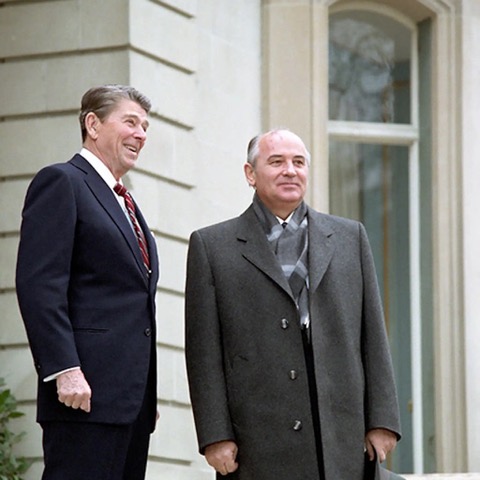
I want to go back to the time when you worked at the NSC drafting Soviet policy for President Reagan. You were the main drafter of a very important speech.I n January 1984, the first opening toward the Soviet Union. How do you remember that episode? Yes, I did draft that. And the problem then was that we had actually, the Soviets had walked out of all our arms control agreements when we started deploying the intermediate range. Missiles in Europe. This was done in order to give them an incentive to remove them all. But it was clear to me that there was a tremendous amount of misunderstanding between the two. And I also knew that President Reagan really wanted to get back in negotiations when I had joined the NSC at the recommendation of.Secretary of State Shulz, there were no Start Department or Foreign Service officers on the NSC. And so I was told at the beginning that the president had decided it was time to negotiate with the Soviet Union, and that although a lot of people in the administration didn't know it, they were bringing me on the NSC to design a negotiating strategy. Most secret meetings that we had. They took me in, there were only about six or seven people there The president met, and it was a secret in the living quarters of the White House, not his office. And he was announcing to the senior people there that he wanted to negotiate with the Soviet leaders. And I remember our Defense Secretary Weinberger was there, and he started saying, well, you know, you can't trust them, and so on. And I remember he turned and he said, Cap, we're not going that route. And so, first of all, we needed to get a meeting with the Soviet leader. But Reagan kept sending messages but as he later said, they keep dying on me. What I understood was he really wanted to develop this. And before I wrote that, Secretary of State Shul had set up again a secret meeting of principal people. We had the Secretary of Defense and his deputy, and the vice president, and a group which would meet for breakfast on Saturday morning in his. Dining room and try to discuss these issues. And he made me sort of the executive secretary of that group. And so I was able to inject some ideas in there and basically get their approval. And some of these were things we were not going to do that we would not seek military superiority. We would not try to bring down the Soviet Union as such. But to deter their actions abroad to expand it, and that we would not question the legitimacy. Some of our people were saying, well, you know, this was a government that was illegitimate to begin with because it was a revolution. In other words, we have to deal with them as the people. And I actually got these things approved, then I used them as guidelines in developing the speech. And what I tried to do was to make all of these issues a matter of negotiating in our mutual interest. And what came out to be eventually what we call a four part agenda. And the speech, I think later, used the word cooperation something like 30 times. So when it came to arms reduction, we said that we need to reduce arms to the lowest levels possible. First of all, nuclear weapons. We must cooperate to do so. In other words, we've both got to make changes. And then when it came to supporting these local wars, I had the president said, and he read these very carefully, That we must cooperate to bring peace to areas where there were local wars and negotiate agreements that would bring peace. In other words, we no longer recognize, these were local issues and the problems were we were supporting each different side. We need, instead of supporting fighting, we Bring them to peace. And then the third was that we need to cooperate to improve observance of human rights. We didn't say, you got to clean up your act. We said we must cooperate. And then the fourth, I wanted to bring down the Iron Curtain, the isolation which they had imposed upon us. And I said, we must cooperate to build a better working relationship, not, you got to. Bring down the Iron Curtain. In other words, we phased it that way. And then we began to act that way because, for example, I had observed that, particularly during that earlier, we had simply presented our arms control negotiations without any prior consultation with them. In this particular tour, the Carter administration, when they made a proposal which, if it had been negotiated quietly and Carter had been willing to recognize the agreements that had already been made, was imminently negotiated. But instead, he confronted them suddenly and publicly. And so, one of the things I understood is we've got to stop this accusing each other publicly, but rather Try to find privately compromises here. And this was something that both Schultz and particularly President Reagan understood very well. So, finally, when, so in that speech, as I said, the second point I would make is that with all of his criticisms of communism, President Reagan never once insulted the Soviet leader publicly. And I recall the first time Foreign Minister Gromyko came, who was famous as Mr. Nyet, to the White House. When he came in, President Reagan shook hands and said, We hold the peace of the world in our hands. We must cooperate. And he never criticized him by name publicly. In fact, he treated him almost as a chief of state, giving him a dinner in the Lincoln Dining. And also, I'll continue on to say that when Gorbachev removed Gromyko as foreign minister and put in Shevardnadze, who had been the Georgian party secretary, that in their first meeting in Stockholm, I think they were there for a funeral, but in their first meeting, when Secretary Schulz began to speak About human rights. He would always begin the private meeting there with that. And when he presented our list of political prisoners and refusenics and others to Shevardnadze said, Well, okay, Can we send you lists about problems you have, particularly with your blacks and the rights of women? And Shultz said, Well, of course. We're making progress, but we're not there yet, and we can use all the help we can get. This was the spirit. Now, compare this with what happened later, which we beat upon them on infractions of human rights at the same time. We have had our own problems at home. And the thing is, neither of us are perfect. And okay, we thought we were much better off than they were, but if you're going to negotiate these things. Going to continue to say what that produced. Two years later, when Schultz and Shevardnadze met in New York during a meeting of the United Nations, we were in a small meeting. I think there were three or four of us on each side. And Schultz gave Shevarnadze our usual, what we called a representation list of human rights cases. He took it and said, Well, George, I'll take this back to Moscow. If Is correct, I'll do my best to correct it. Then he paused and he said, But I want you to know one thing. I'm not doing this because you ask me. I'm doing this because it's what my country needs to do. Schultz stood up, put out his hand. As they shook hands, Schultz said, Edward, I will never ask you to do something I do not consider in your country's interest. Those two shook hands. The Cold War was over as far as they were concerned Everything we placed this. One more remark about this. Years later, I asked my friend Bismirnik, who had been ambassador to the U.S., deputy foreign minister, and finally was one of their last foreign ministers of the Soviet Union. I said, Sasha, how is it we got by with making our agenda a mutual agenda? I said, Did you realize that? And he said, Well, of course.No specialist could have missed it. And I said, How do we get by with it? He said, You never claimed it as your agenda. You presented it as a mutual agenda, and it was a mutual agenda.
Fantastic. A couple of more questions, and thanks a lot for your time. I want to ask you about February 1990, when James Baker arrives in Moscow to negotiate German reunification. And make the proposal to Gorbachev. You've reunited Germany in NATO, and then NATO will not move one inch east. There's a lot of discussion today about the interpretation of that statement and the meaning of it. You were in Moscow at that time. How did you understand it Today. Okay. I know this has been very controversial, but let me say one thing that, whatever, whether that was a valid promise or not, the real problem was the expansion itself. It was wrong whether or not there had been a promise. So I think that's something we need to bear in mind. And first of all, let me say that, yes, I was there, and I heard him say that at least three times. First of all, I did. I was not in the private meeting when he first said it to Gorbachev. I heard him say it as we were riding in his car back to the embassy. He was in a private meeting and he repeated to me what he had said. And it was think of this. Wouldn't it be best if NATO is preserved in order to make sure that there is no further expansion Of nuclear weapons, and that there can be some American military protection of Europe. And he said there would be no expansion of NATO, not one inch. That meant that, in effect, the territory of the GDR, East Germany, would not become NATO, if you take that literally. Well, then he repeated this to me in the car. Then, when we got back and he was briefing a delegation he had brought with him, he repeated the same words. The next time he met with Shevardnadze, that meeting, he repeated the same words. And actually, these words are repeated in Gorbachev's memoirs, since he remembered them. Now, Gorbachev had answered, well, obviously, any expansion of NATO would Be unacceptable. But I understand what you're saying. What he was really saying was we need to keep NATO to keep Germany from going nuclear in the future and threatening others in Europe. This was implied there and not said explicitly. And Gorbachev continued, Well, this would be unacceptable, but I do understand what you're saying. And I want you to know that we are no longer trying to exclude you from Europe. Here militarily. He said, we can understand that you can be a stabilizing force. And he added, well, maybe you don't need 300,000 troops, but that could be reduced. But it is no longer our policy to try to exclude you from Europe. Okay. Now, I understand that when actually Baker had gotten this idea from the German foreign minister, it was Genscher Idea to make those guarantees. And I would say Genscher continued to make these guarantees during the verbally. But when Baker got back to Washington, the lawyers say, look, you can't have part of a nation not in there legally. So I would say, as they negotiated what they call the two plus four agreement, the agreement that East Germany would Become a part of the Federal Republic of Germany under terms that the Federal Republic had set. They made two exceptions that in that territory they accepted that it would be part of NATO, but there could be no deployments of foreign troops or nuclear weapons. So, in that, the implication is if there is expansion, there will be that. But there was no mention of Eastern Europe. Now, let me have one.More comment about the background of this. When President Bush had met with Gorbachev in Malta, they issued a statement after that. And the statement one was that the Soviet Union would not use force regarding political changes in Eastern Europe. And the second was that the United States would not take advantage of that. Now, so the background Was, and this was in writing. Now, again, it wasn't a treaty, but I would say that as these things were being negotiated, if anybody had asked me when I was ambassador in Moscow, is there an implied guarantee that there'll be no expansion of NATO? I'd say yes, of course. Why should there be? And I would also emphasize that this was when there was still a Soviet Union, it was before it broke up in Russia with less than half the population. So the whole idea that you had to expand NATO to protect from Russia, I think, just got it absolutely backwards.
Very interesting. One more question. No, two, in fact. Why do you think Gorbachev didn't insist on putting this point into the two plus four? On the reunification of Germany? Well, I would say one thing. You know, he was dealing with so many things at that time. We were amazed that he was, I mean, he was already getting the attempted, you know, in the Baltic states, particularly in Lithuania, at a time where I think he really risked a coup d'etat against him. At the time when Lithuania was declaring its independence, and he was doing his best to avoid use of force, he was juggling so many problems. His own country was falling apart, and mainly what he needed was economic assistance. And so these negotiations had to be with the Germans. Now, how could that treaty, again Commit other governments in the future. I mean, I don't know how you could have written it as a legal requirement. And I'd also say that we didn't hesitate to withdraw later from agreements that had been ratified and so on. So I don't think it was politically possible and it shouldn't have been necessary to write it. But as I've said before, let's put that entirely aside, Even if that had never happened, it was a fundamental mistake.
Today, a lot of people say you cannot trust Putin, you cannot trust Russia. And all the way through history, Russia has not honored agreements of which they were a party. What is your own experience? What do you think of this statement? They were very meticulous, actually, in abiding by agreements which were specific and clear. Sometimes, with some agreements, when they were general, we would interpret them in different ways. But I found with these arms control agreements, when we negotiated the details, they were very much willing to. Abide by them. And so I think now there were other broad agreements. For example, the Soviets did have a biological weapons program going contrary to the General Biological Weapons Treaty, one that we tried to deal with privately. And once we understood what it was, Our governments sent me and my British colleague to the foreign minister and to Gorbachev's assistant to tell them, look, shut this down. We don't want this to become an issue. And it turned out that, well, he did try to shut it down. But that's a complicated thing that involved some visits back and forth, Days we were trying to clear these things up. So, yes, there were some of these broad agreements that, like that one, but the bilateral agreements, when we negotiated the nuts and bolts, they were quite meticulous in carrying them out. And there were times that they would even help us find a way out. I recall when we were negotiating their withdrawal From Afghanistan. Finally, the last two issues were delegated to me as the ambassador at that time and Deputy Foreign Minister Vorontsov And one of the requirements of that agreement was that supposedly they wanted us to agree not to continue to supply arms to the Mujahideen. Well, we were not willing to make that. But so when I met with Lauren Soff, and this was one of the issues that we'd been instructed to agree on, and I said, we're simply not willing to agree on this. And he said, look, we know that you don't supply them directly, you supply them to the Pakistan's. And so you could sign this because you're not supplying them directly. Yuli, are you suggesting that we take that subterfuge? And he said, I'm just telling you what's possible. And I said, Well, okay, I'll report this to Secretary Schultz, but he's not going to be comfortable. So Schultz said, Okay, I'll send him a letter saying we're interpreting this to mean that we do not have to change any of our present. And he sent that as a letter to Shevardnadze to clarify, in which case, okay, we signed it. And then the next one was that whether it had to do with the border, and our position was they had to accept the Pakistani definition of the border. So those last two things, I'd say, we negotiated. I'll also add that as we were negotiating this, Edward Cherenotze at one point told Schultz, These guys you're protecting are not your friends. We found out that later.
Who is the most impressive statesman you have known? I think George Schultz, as far as our secretaries of state. And I think Edward Cherenotze also needs full credit because at times he would go further than probably Gorbachev would. And that was particularly true when it came to the Gulf War and obtaining the Soviet abstention in the Security Council. But again, a lot of these negotiations were carried out privately. These were people that had begun to trust each other. And this was certainly true, I think, of the relationship that we developed with Gorbachev. And in those last two years, I could meet with him privately or with Chevron Nazi, and they would tell me about almost many private things. And the thing is, we were all trying to bring more democracy.The Soviet Union under very difficult conditions. And so at one point, when after the attack on the television tower in Vilnius in January of 91, this was something that Gorbachev did not order. As a matter of fact, as in one of my books, I pointed out it was sort of a rehearsal to the attempt to remove him later. President Gorbachev, the President sent Gorbachev a letter, a fairly long letter, saying that if the violence continues in the Baltic states, he's going to have to withdraw from a number of our agreements. And I took this to Gorbachev Without an interpreter or anybody to take notes. Most of my meetings I tried to do that way to be frank. So often in these meetings there was just Gorbachev and his assistant Chernyaev. And I read the letter of translation to him as I handed it to him. And Gorbachev's first question was Did the president say that he has taken these issues or that he will? And I said,Said he would if the violence continues in the Baltic states. And at that point, much to my surprise, he turned to me and said, Jack, tell me, how do you read the situation here? Well, this had followed a sort of what we have then called a turn to the right, where from a Sheranadze had resigned as foreign minister, saying that a dictatorship. Is coming and they he had put a number of hardliners in. I said, I was very much surprised, first of all, but I thought, well, he's asked me, so I'll tell him. I said, Well, Mr. President, you know, and we were speaking Russian, that I had all tried to explain what I thought you were doing, but since December, I'm beginning to wonder. I mentioned several things that happened, you know, he cracked down in several places and so on. And he listened carefully, no interruptions. And he then looked at me and said, please tell my friend George that this country is on the verge of nuclear war. I'm sorry, this country is on the verge of civil war. And that I've got to Do everything necessary to prevent that. And that means I'm going to have some zigs and zags in my policy. Please help your president understand that. My ultimate goals have not changed. Well, I mean, when you have the president of a country telling the ambassador of another country that his country is on the verge of civil war, that's and actually telling the truth. That we had at that time because we used this discreetly, and he understood. I think basically we were trying to help him, and that we too wanted them to democratize. And at that point, we certainly didn't want the Soviet Union to break up the way it did. And later, of course, in August of '91, when Bush made his last trip to the Soviet Union, He went from Moscow to Kyiv and made a speech that told the Ukrainians, and also these were for the other republics of the Soviet Union, that they should join a confederation with Russia to preserve that part of the Soviet Union. The three Baltic countries. And also, he warned against suicidal nationalism. He was thinking then of Gomsakuria in Georgia, who was already using force in Abkhazia and South Ossetia. So, at that time, we were doing our best to encourage a liberalization of the Soviet Union with 12 republics. Idea that this was, as one of our columnists called his chicken Kiev speech. Well, this was not the assumption being that it was in our interest for the Soviet Union to break up. At that time, we did not consider it in our interest. So, this gets back to one of the original questions the idea that the West or the United States brought on the breakup of the Soviet Union and that was a good thing. Is simply incorrect.
One last question that I forgot to ask you the similarities between the Brezhnev doctrine and the liberal international order. Yes. Well, I do think that what we call the liberal world order, which has turned out to be neither liberal nor order, But the opposite, it was a very close analogy to what the Soviet Union had been during what we call the Brezhnev Doctrine. And that was that if a state had socialism, that is, as a result of a proletarian revolution, that it had to be supported by other states because this was the future of the world. And then, you know, we had a famous article and then book by Francis Fukuyama, which proclaimed the ends of history, that this had proven that capitalism and democracy was the future of the world, and that therefore this was something that could be supported. What this meant was that later when Our policy began one that we could use military force and economic compulsion to create democracies elsewhere. It is an utter, I would say, oxymoron. How can an outsider create democracy in another country? When you interfere in another country's politics, it usually rebounds against those you're supporting. Nobody wants outsiders determining your politics for you. So the whole idea was just as fallacious as the Marxist idea that the world was destined for a bourgeois revolution. and of course, as it has been implemented by using war and economic sanctions in order, so called, to support democracy. Actually, have diminished the democracy that we have. I would also say I think the idea of classifying countries as democracy or not democracy is again absurd. A democracy is a process and it's not a system by any universal definition. And the fact that when you have a revolution, Usually it does not produce a democracy. It produces something else. So that I think this whole idea, and I think it has created more problems, it has not spread democracy. Democracy is now being under great threat in our own country. In the United States, it's very hard to reconcile many of the present things that have happened as democratic. And so I would say that we have to recognize that in the United States, we have a republic, and the word democracy does not occur in our Declaration of Independence, in our Constitution, or in our Pledge of Allegiance. We pledge allegiance to the flag of the United States, the nation, and the republic it represents. Clear that practically our republic is controlled by an oligarchy. And there have been a number of studies that point this out. So to go out and classify countries as either democratic or not, and we've got to change those that are not, that is exactly to me the same as the idea that the world was going to become communist through proletarian revolution, and you've got to support that everywhere it happens.
Cubakrisen
I efteråret 1962, da verden under den såkaldte Cubakrise befandt sig på randen af en atomkrig mellem USA og Sovjetunionen, gjorde den 33-årige Jack Matlock tjeneste på den amerikanske ambassade i Moskva. Han talte russisk og fik til opgave at oversætte flere af den sovjetiske leder Nikita Khrusjtjovs hemmelige beskeder til præsident Kennedy i Washington i løbet af de tretten nervepirrende dage.Baggrunden var, at USA ved flere lejligheder enten havde forsøgt at invadere Cuba og omstyrte det socialistiske regime eller likvidere dets leder, Fidel Castro – uden held. For at sikre sig mod gentagelser bad Castro i al hemmelighed Sovjetunionen om at installere missiler på øen bevæbnet med atomsprænghoveder.Det opdagede de amerikanske efterretningstjenester, og Kennedy krævede, at missilerne blev fjernet. Khrusjtjov svarede i første omgang, at missilerne var tænkt som et forsvar af Cuba, ikke som offensive våben rettet mod USA. Den forklaring blev afvist af Kennedy, og han beordrede en blokade af Cuba og antydede, at han var parat til at bruge magt, altså atomvåben, hvis ikke USA fik sin vilje.Matlock siger:“Begge ledere indså, hvor tæt de var på en atomkrig, så de trådte et skridt tilbage. Khrusjtjov lovede at trække de sovjetiske missiler tilbage og sige det offentligt, mens Kennedy uden at informere offentligheden lovede at fjerne amerikanske missiler, som USA i hemmelighed havde opstillet i Tyrkiet.”Matlock tilføjer:“Med andre ord fik vi det til at se ud, som om Khrusjtjov bøjede sig, men i realiteten var der tale om en aftale. I fjerner jeres missiler fra Cuba, og vi fjerner vores fra Tyrkiet.”Tæt på atomkrig
Hvad Matlock ikke vidste, da han sad på den amerikanske ambassade i Moskva i 1962, var, at man var endnu tættere på en atomkrig, end han forestillede sig på det tidspunkt.Han siger:“Flere af de centrale aktører fra dengang mødtes efter Den Kolde Krig ved et par lejligheder, og her viste det sig, at kommandostrukturen for de sovjetiske atomvåben var en anden end i USA.”Hvordan det?“En af vores destroyere blokerede en sovjetisk ubåd med atomraketter fra at komme op til overfladen, og det viste sig, at kaptajnen havde beføjelser til at affyre atomvåben og var parat til det, men til alt held var kommandanten for hele den sovjetiske eskadre i området ombord på ubåden, og han afviste det.”Jack Matlock i 1986. White House Photo Collection Galleries / Ronald Reagan Presidential Library, Public Domain
Cuba og Ukraine
Du har gjort opmærksom på Cubakrisen som et relevant referencepunkt i forbindelse med krigen i Ukraine, hvad tænker du på?“Den episode viste, hvordan vi ville reagere, hvis et andet land forsøgte at etablere en militær alliance på vores grænse, som vi ikke var en del af, altså præcis det samme vi har forsøgt i forhold til Ukraine, og jeg fatter ikke, hvorfor amerikanske ledere og vores europæiske allierede ikke forstod, at det samme ville gælde for Rusland i forhold til Ukraine, som det i 1962 gjorde for USA i forhold til Cuba.”Matlock tilføjer:“Det ensidige og selektive blik på, hvad der sker i Ukraine, er frapperende. Der skete et systemskifte i Ukraine i 2014, hvor USA støttede et kup og bragte et nyt pro-vestligt styre til magten. Hvis et andet land eller en gruppe af lande havde organiseret et lignende kup i Mexico og indsat en ny regering, der så USA som fjende, tror du så, at USA ville have anerkendt den regering og siddet stille og lade det ske? Selvfølgelig ikke.”Ser du det som den centrale lære af Cubakrisen?“Jeg mener, at der er en lighed mellem Cubakrisen og kombinationen af den ukrainske regerings antirussiske politik over en periode og den trussel, der ifølge Moskva fulgte med et ukrainsk medlemskab af NATO, og vi skal huske på, at selvom Ukraine ikke er blevet formelt optaget i alliancen, så har vi leveret våben til dem og opbygget deres militær som et de facto NATO-medlem. Det var den udvikling, der drev Rusland, ligesom det i sin tid drev USA i forhold til Cuba, og forsøget på at isolere Rusland som reaktion på Moskvas ageren gør bare problemet større.”Vesten har kastet vrag på Den Kolde Krigs erfaring
Matlock mener, at USA og dets allierede de seneste 35 år har formøblet dyrt købte erfaringer fra Den Kolde Krig.Han siger:“Vores og vores NATO-allieredes politik under Den Kolde Krig gik ud på at bringe Sovjetunionen ind i det globale fællesskab af nationer. Det lykkedes, og det var et af de ypperste resultater for vores udenrigspolitik.”Matlock tilføjer:“I 1991 havde vi fået ‘et helt og frit Europa’, som præsident Bush formulerede det, og den sovjetiske leder Mikhail Gorbatjov forestillede sig Sovjetunionen som del af et fælles europæisk hjem. Det havde vi i 1990’erne, og det var netop dette samlede og hele Europa, som NATO begyndte at rulle tilbage med ekspansionen mod øst, og det er tragisk, at vi nu bare forstærker uenigheden og konflikten mellem os. Det vil få tragiske konsekvenser for os alle.”I 2014 mødtes Jack Matlock med Mikhail Gorbatjov. The Gorbachev Foundation
En af USA's største strategiske brølere
I forbindelse med den første udvidelse af NATO i 1997 afgav du vidnesbyrd i Senatet, som skulle godkende beslutningen. Her advarede du om, at udvidelsen af NATO ville gå over i historien som en af USA's største strategiske brølere. Står du stadig ved den udtalelse?“Ja, fuldkommen, og vi lever nu med konsekvenserne. Så godt som alle de aftaler om atomnedrustning, vi havde indgået med Sovjetunionen og Rusland, ligger i ruiner. Vi har opgivet stort set alt det, vi gjorde for at slutte Den Kolde Krig, og vi fører nu både en propagandakrig og en reel krig mod en atomvåbenmagt. Det mener jeg er ekstraordinært farligt, og det er blevet forværret af angrebet på Iran.”Matlock henviser i forbindelse med Iran til en rapport, han i sin tid blev bedt udarbejde for sin daværende chef, udenrigsminister George Shultz, om lande, der havde godkendt et program for udvikling af atomvåben, men derpå havde opgivet sine planer.Han siger:“Det viste sig, at alle disse mindre lande ikke forsøgte at anskaffe sig atomvåben for at angribe USA, men de ville have dem for ikke selv at blive angrebet, og erfaringen siger, at vi har angrebet dem, der opgav deres atomvåbenprogram. Det skete for Irak og Libyen, så hvad skal andre lande tænke? Nordkorea nægtede at opgive sit program, de har nu atomvåben, og de bliver ikke angrebet af USA eller andre.”Matlock fortsætter:“Jeg tror, at vi efter USA's og Israels seneste angreb på Iran kan regne med, at Iran vil udvikle atomvåben, eftersom både Israel og USA har dem. Og hvis de ikke udvikler dem, vil de få dem af en allieret, for eksempel Pakistan, der har dem, og hvis det sker, så vil Saudi-Arabien også få atomvåben. Det er ikke verdens undergang, for alle disse lande vil først og fremmest anskaffe sig atomvåben som en forsikringspolitik, så de ikke bliver angrebet.”Matlock tilføjer:“Den største fare er, hvis atomvåben spredes sådan, at de slipper ud af ansvarlige hænder. Og her er det værd at minde om, at netop Vladimir Putin har sikret, at de russiske atomvåben er under kontrol. Hvis han bliver fjernet, er der ingen garanti for, at hans efterfølger vil agere på samme måde. De, der følger med i den russiske debat, ved, at der er kræfter, der presser på for at få Putin til at bruge atomvåben som svar på, at NATO-lande leverer offensive våben til Ukraine. Igen: Jeg fatter ikke, at vores ledere ikke forstår, hvilken enorm risiko de løber, og at det slet ikke er i deres interesse at isolere Rusland. De skader sig selv.”NATO er ikke mere en forsvarsalliance
I dit vidnesbyrd til Senatet i 1997 i forbindelse med den første udvidelse af NATO sagde du også, at du altid har været en varm tilhænger af NATO, ikke mindst fordi NATO blev etableret som en forsvarsalliance. Mener du stadig det?“Nej, jeg mener, at NATO er blevet en offensiv alliance. Den blev brugt offensivt første gang i 1999 mod Serbien – og flere gange senere.”Matlock uddyber:“NATO var tænkt som en forsvarsalliance med henblik på at beskytte det atlantiske fællesskab mod den sovjetiske trussel, men da Sovjetunionen gik i opløsning, og det nye Rusland med halvdelen af Sovjetunionens befolkning ikke var en trussel mod nogen, begyndte vi at ekspandere NATO, og vi begyndte at bruge NATO offensivt mod lande, der hverken havde truet eller angrebet alliancen, og lad os være ærlige og sige, at alt det, vi nu beskylder Putin for, skabte USA og dets allierede fortilfælde for i 1990’erne og senere. Putins invasion af Ukraine er illegal og i strid med folkeretten, men det var os, der skabte præcedens for det.”Hvad tænker du på?“Serbien i 1999, Irak i 2003 og Libyen i 2011 for eksempel. NATO’s angreb på Serbien skete som reaktion på serbernes vold mod Kosovo-albanerne, som i øvrigt havde stået bag en omfattende terrorkampagne. NATO begyndte så at bombe Serbien uden nogen serbisk provokation, trussel eller angreb på et NATO-land. Og da NATO reelt havde besat Kosovo, anerkendte vi Kosovos uafhængighed på trods af serbiske protester. Vi havde dermed skabt præcedens for, at man i Europa kan ændre grænser med magt og uden samtykke fra alle involverede parter, i dette tilfælde Serbien, og vi gjorde det tilmed med mindre legitimitet end i Krims tilfælde.”Øjenvidne til historien
Jeg vil gerne spørge om den proces, der i løbet af 1990 endte med genforeningen af Tyskland og Sovjetunionens accept af et genforenet Tyskland i NATO. USA's daværende udenrigsminister James Baker foreslog på et møde med Gorbatjov i Kreml den 9. februar 1990, at hvis Sovjetunionen som en af sejrherrerne i Anden Verdenskrig og dermed med vetoret accepterede et genforenet Tyskland i NATO, så ville alliancen ikke rykke en tomme mod øst. I dag er der stor debat om meningen med den formulering. Du var i Moskva på det tidspunkt, hvordan forstod du det dengang, og hvordan forstår du det i dag?“Jeg ved, det er kontroversielt, men før jeg svarer på dit spørgsmål, vil jeg sige, at uanset om der blev givet et validt løfte til Gorbatjov i forhold til udvidelsen af NATO, så er det selve ekspansionen, der er problemet. Det var forkert, uanset om der blev givet et løfte eller ej. Det er vigtigt at holde sig for øje.”Ok, og hvordan forstod du så Bakers ord?“Jeg var der, og jeg hørte Baker bruge den formulering mindst tre gange. Jeg deltog ikke i hans møde med Gorbatjov, det var på tomandshånd, men jeg ventede udenfor og kørte bagefter med Baker tilbage til ambassaden. I bilen fortalte han mig, hvad han havde sagt til Gorbatjov.”Reagan og Gorbatjov sidder for bordenden. Yderst til højre, bag Reagan, sidder Jack Matlock. Ronald Reagan Presidential Library
“Ikke en tomme mod øst”
Og hvad var det?“Overvej dette, sagde han til Gorbatjov, ville det bedste ikke være, at vi bevarer NATO for at sikre, at der ikke bliver nogen videre spredning af atomvåben, og at vi fastholder en vis amerikansk militær beskyttelse af Europa, og så vil der ikke blive nogen ekspansion af NATO, ikke en tomme.”Hvad betød det?“Det betød, at det territorium, som havde været Østtyskland, men nu blev en del af et genforenet Tyskland, ikke ville blive medlem af NATO. Det sagde Baker til mig i bilen, og da vi kom tilbage på ambassaden, gentog han præcis de samme ord til den delegation, han havde med sig, da han briefede dem. Og han gentog dem, da han senere samme dag mødtes med den sovjetiske udenrigsminister, Eduard Sjevardnadze, og de står også i Gorbatjovs erindringer, så han huskede dem også.”Matlock fortsætter:“Gorbatjov svarede Baker, at enhver udvidelse af NATO var uacceptabel, men han tilføjede, at han forstod pointen i det, Baker sagde, nemlig at USA skulle blive i Europa for at forhindre Tyskland i at anskaffe sig atomvåben engang i fremtiden og true andre i Europa. Det var implicit i samtalen, men blev ikke sagt direkte. Gorbatjov sagde også, at Moskva ikke længere havde det som mål at få USA's militær ekskluderet fra Europa, og at de forstod, at USA kunne være en stabiliserende faktor, men at det nok ikke var nødvendigt at beholde 300.000 soldater i Vesteuropa.”Matlock tilføjer:“Baker havde fået ideen om et løfte til Gorbatjov om ikke at udvide NATO fra den tyske udenrigsminister Hans-Dietrich Genscher. Det var ham, der foreslog, at vi skulle give Sovjetunionen den garanti, og Genscher gentog det flere gange mundtligt i de forhandlinger, der fulgte om betingelserne for den tyske genforening.”Topmødet på Malta
Og hvad skete der så videre?“Da Baker kom tilbage til Washington, sagde folkeretsjurister, at man ikke kunne have en del af et genforenet Tyskland i NATO og en anden del, der stod udenfor, så derfor blev man i den endelige traktat om den tyske genforening mellem Øst- og Vesttyskland og Sovjetunionen, USA, Storbritannien og Frankrig enige om, at Østtyskland som en del af forbundsrepublikken også ville blive en del af NATO, men at der hverken ville blive deployeret udenlandske tropper eller atomvåben i det tidligere Østtyskland, så implikationen var, at hvis Østtyskland blev en del af NATO, så stoppede det her, men Østeuropa blev ikke nævnt.”Matlock fortsætter:“Lad mig tilføje en ting mere om baggrunden. Da Gorbatjov og Bush mødtes på Malta i december 1989 til et topmøde, påtog de sig hver især en forpligtelse. For det første forpligtede Sovjetunionen sig til ikke at gribe ind og bruge magt i forbindelse med de geopolitiske forandringer i Østeuropa, og for det andet lovede USA ikke at udnytte og drage fordel af den nye situation. Det aftalte man på mødet, og bagefter sendte Bush et brev til Gorbatjov, som bekræftede den aftale. Det var mig, der personligt overbragte brevet til Gorbatjov. Det aftalte blev altså skrevet ned, og det var blevet forhandlet, selvom det ikke var en traktat.”Matlock tilføjer:“Jeg vil sige, at hvis nogen havde spurgt mig, mens jeg var ambassadør i Moskva, om der var tale om en implicit garanti til Sovjetunionen om ikke at ekspandere NATO, så ville jeg have svaret: Selvfølgelig. Jeg vil også understrege, at det var mens Sovjetunionen stadig eksisterede, altså før landet faldt fra hinanden, og Rusland stod tilbage med blot halvdelen af den sovjetiske befolkning. Så hele ideen om, at man skulle udvide NATO for at beskytte sig mod Rusland, var at vende tingene på hovedet, en total misforståelse.”Matlock gør opmærksom på, at det især var etableringen af baser i nye NATO-lande og aftaler om installering af missilforsvar i Rumænien og Polen under præsident Obama, som fik Rusland til at føle sig truet, eftersom softwaren i missilerne let kunne ændres, så de blev offensive i stedet for defensive.Panama og Rumænien
Jack Matlock mindes en episode et par uger efter topmødet på Malta, hvor USA invaderede Panama for at fjerne diktatoren og narkosmugleren Manuel Noriega. Operationen varede nogle uger, 314 militærfolk og 202 civile blev slået ihjel blandt de lokale, mens USA mistede 23 soldater og 3 civile.Nogle dage senere fandt der et oprør sted i Rumænien, hvor diktatoren Nicolae Ceausescu blev afsat og henrettet. I den forbindelse blev Matlock instrueret af Washington til at informere den sovjetiske ledelse om, at hvis Kreml fandt det nødvendigt at bruge militær magt i Rumænien, for eksempel for at få sine egne borgere ud af landet, så ville præsident Bush ikke betragte det som en krænkelse af den aftale, han og Gorbatjov havde indgået på Malta om ikke-indblanding.Da Matlock den 24. december mødtes med en sovjetisk viceudenrigsminister for at overdrage beskeden fra Washington, lød svaret med et glimt i øjet:“Vi har med venlig hilsen videregivet Brezjnev-doktrinen til jer. Tag det som en julegave.”Senere kommenterede Matlock i et tilbageblik:“Det faldt mig ikke ind dengang, selv om det burde, at topfolk i Bush-administrationen rent faktisk håbede, at der ville komme en sovjetisk intervention i Rumænien for at ‘balancere’ opfattelsen af passende adfærd i de respektive indflydelsessfærer.”Brezjnev-doktrinen og den liberale verdensorden
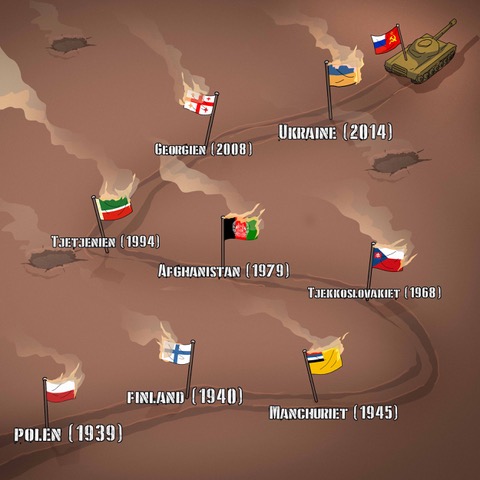
Når Matlock noterer, at han burde have forstået bagtanken med instruktionen fra Washington, skyldes det, at han i de følgende år iagttog en forbløffende lighed mellem den udenrigspolitiske doktrin, det kommunistiske Sovjetunionen havde praktiseret, og så den amerikansk ledede såkaldte liberale internationale orden, der ifølge Matlock hverken har været liberal eller en orden. Brezjnev-doktrinen indebar, at Sovjetunionen havde en pligt til at udbrede og forsvare socialismen mod indre og ydre trusler, mens USA ifølge den liberale verdensorden havde pligt til sammen med sine allierede at udbrede og forsvare demokratiet.Det skete i Europa, Mellemøsten, Asien og Mellem- og Sydamerika.Den såkaldte Brezjnev-doktrin fik sit navn efter den sovjetiske leder Leonid Brezjnev, der stod i spidsen for landet fra 1964 til 1982. I 1968 sendte han sovjetiske tropper til Tjekkoslovakiet, ligesom man havde gjort i 1956 i Ungarn og i 1979 i Afghanistan. I alle tilfælde påkaldte Moskva sig en ret til at gribe militært ind for at sikre og fremme et socialistisk styre kontrolleret fra Moskva, fordi det var historisk forudbestemt, at hele verden ville blive først socialistisk og siden kommunistisk.Fukuyamas famøse ord
Matlock henviser til Francis Fukuyamas herostratisk berømte ord om historiens afslutning som en parallel til det sovjetiske verdensbillede. Fukuyama skrev i 1989 i forbindelse med afslutningen på Den Kolde Krig:“Hvad vi måske er vidne til, er ikke bare enden på Den Kolde Krig, enden på en bestemt periode i efterkrigstidens historie, men afslutningen på historien som sådan, altså slutpunktet for menneskets ideologiske udvikling og universaliseringen af det vestlige liberale demokrati som den endelige form for menneskelig regeringsførelse.”Matlock kommenterer:“Fukuyama mente, at historien om enden på Den Kolde Krig havde vist, at demokrati og kapitalisme var hele verdens fremtid, og derfor skulle det støttes og spredes. USA og dets vestlige allierede begyndte så ved hjælp af både militær og økonomisk tvang at sprede demokrati.”USA's politik ude i verden har også svækket vores demokrati hjemme, og det er absurd at opdele verden i demokratier og ikke-demokratier.
Jack Matlock, tidligere amerikansk topdiplomat.Matlock fortsætter:“Men hvordan kan man udefra skabe demokrati i et andet land? Hvis man griber ind i et andet land, får man normalt en modreaktion mod dem, man udefra støtter. Ingen ønsker, at outsidere skal diktere deres politik. Så ideen om etablering af en liberal orden ved hjælp af økonomiske sanktioner og militær magt var lige så fejlagtig som den marxistisk-leninistiske ide om, at verden per definition var på vej mod en socialistisk revolution.”USA er ikke et demokrati
Matlock gør opmærksom på en misforståelse om, hvad demokrati er.Han siger:“USA's politik ude i verden har også svækket vores demokrati hjemme, og det er absurd at opdele verden i demokratier og ikke-demokratier. Demokrati er en proces, ikke et system med en universel definition. Og når man påtvinger et andet land en ‘demokratisk’ revolution udefra, så fører det ikke til demokrati. Det fører til noget ganske andet, så vores politik har bare skabt flere problemer.”Matlock tilføjer:“Ordet ‘demokrati’ forekommer hverken i vores uafhængighedserklæring, i vores forfatning eller i vores troskabsed. Vi erklærer troskab over for USA's flag, nationen og den republik, nationen repræsenterer. Vi er en republik, ikke et demokrati. Og i praksis er vores republik kontrolleret af et oligarki. Det er svært at forene mange af de ting, der i dag sker i USA, med demokrati. Så at klassificere lande som demokratiske eller ej og gå ud i verden og ændre dem, der ikke er det, er for mig nøjagtig den samme ide som, at verden en dag ville blive kommunistisk via proletariatets revolution.”Arkitekt bag historisk Reagan-tale
Du var direkte involveret i de forhandlinger, der mundede ud i afslutningen på Den Kolde Krig. Den proces begyndte, da du i 1983 blev kaldt hjem fra Prag, hvor du på det tidspunkt var USA's ambassadør, til det nationale sikkerhedsråd i Washington. Den daværende udenrigsminister George Shultz bad dig formulere en strategi for præsident Reagans ambition om at få gang i forhandlinger med Moskva. Det første resultat af dit arbejde var en tale, Reagan holdt i januar 1984, og den blev efterfulgt af en række andre taler i samme ånd. Du var arkitekten bag den tale. Hvordan husker du den episode?“Ja, det var mig, der fik til opgave at udarbejde udkastet. Baggrunden var, at Sovjetunionen i efteråret 1983 havde trukket sig fra alle nedrustningsforhandlinger med os, efter vi begyndte at opstille mellemdistanceraketter i Europa. Det havde vi gjort for at give dem et incitament til at fjerne alle deres egne raketter. Det var klart for mig, at der var en masse misforståelser på begge sider. Jeg blev inviteret til at deltage i hemmelige møder i Reagans private bolig i Det Hvide Hus, hvor seks-syv mennesker var til stede. Reagan meddelte, at han ønskede forhandlinger med den sovjetiske ledelse. Jeg kan huske, at forsvarsminister Caspar Weinberger gjorde indvendinger og sagde, at man ikke kunne stole på dem, men Reagan vendte sig mod ham og sagde: Cap, den vej går vi ikke.”Styrke, samarbejde og dialog
Reagans ønske om forhandlinger med den sovjetiske ledelse blev de første år ifølge den amerikanske præsident forpurret af, at den ene partichef efter den anden døde, før de dårligt var kommet til magten. Sådan var det med først Jurij Andropov og dernæst hans efterfølger Konstantin Tjernenko, men det ændrede sig i foråret 1985, da Mikhail Gorbatjov kom til magten.Matlock siger videre om arbejdet med Reagans første fremstrakte hånd til Moskva i januar 1984:“Derpå begyndte en lille gruppe hver lørdag at mødes til morgenmad hjemme i Shultz’ spisestue. Han gjorde mig til en slags eksekutiv sekretær, så jeg fik mulighed at komme med nogle ideer, der i sidste ende fandt vej til Reagans tale. Noget handlede om ting, vi ikke ønskede at gøre. Vi ville ikke søge militær dominans. Vi ville heller ikke sætte spørgsmålstegn ved det sovjetiske regimes legitimitet, selvom flere på vores side netop argumenterede herfor, og endelig ville vi ikke forsøge at omstyrte Sovjetunionen. Til gengæld ville vi afskrække Moskvas indgreb i udlandet og forsøg på at ekspandere. De ting fik jeg godkendt, og jeg brugte dem som retningslinjer, da jeg skrev Reagans tale.”Matlock tilføjer:“Jeg forsøgte at formulere det hele som et oplæg til forhandlinger i vores fælles interesse. Det endte med en dagsorden bestående af fire punkter: Nedrustning, dernæst stop for proxy-krige rundt omkring i verden, hvor USA og Sovjetunionen støttede forskellige parter. De to sidste punkter var samarbejde om forbedring af menneskerettighedssituationen og forbedring af det generelle samarbejde mellem vores to lande. Vi sagde ikke, at Moskva skulle rydde op hos sig selv. Vi formulerede det hele som et oplæg til samarbejde. Målet med en forbedring af samarbejdet var at få fjernet Jerntæppet, som Sovjetunionen havde påtvunget Europa, men det var ikke sådan, vi formulerede det. I sin tale brugte Reagan ordet ‘samarbejde’ omkring 30 gange.”Reagan hånede aldrig en sovjetisk leder
Ifølge Matlock var der en afgørende forskel på Reagan og hans forgænger, Jimmy Carter. Han uddyber:“Når Carter havde et forslag, så gik han ud i offentligheden med det og konfronterede Moskva uden at føre en dialog med dem bag kulisserne i forsøget på at finde et kompromis. Jeg forstod, at vi var nødt til at gøre det anderledes, hvis vi ville opnå resultater, så vi havde en dialog bag kulisserne, og det forstod både præsident Reagan og udenrigsminister Shultz.”Matlock hæfter sig samtidig ved, at præsident Reagan på trods af sine ideologiske uoverensstemmelser med Moskva aldrig hånede eller krænkede en sovjetisk leder offentligt, og det samme gjaldt, når de mødtes ansigt til ansigt. USA's seneste tre præsidenter har alle droppet den etikette. Det gælder både Barack Obama, Donald Trump og Joe Biden.Matlock mindes et møde efter Den Kolde Krig med en af Sovjetunionens sidste udenrigsministre og tidligere sovjetisk ambassadør i Washington, Aleksandr Bessmertnykh:“Jeg spurgte ham, hvordan kan det være, vi slap af sted med at gøre vores dagsorden til den fælles dagsorden? Var I klar over det? Han svarede: Ja, selvfølgelig var vi klar over det, det kunne enhver ekspert se, men I slap afsted med det, fordi I aldrig sagde, at det var jeres dagsorden. I insisterede på, at det var vores fælles dagsorden, og det var det også.”Vestlige myter om Den Kolde Krig
Her i Vesten er det en udbredt opfattelse og ifølge dig en fatal misforståelse, at først afslutningen på Den Kolde Krig, dernæst kommunismens nederlag i Sovjetunionen og endelig Sovjetunionens opløsning fremstår som én begivenhed drevet og fremtvunget af USA. Det er også derfor, at mange er af den opfattelse, at USA vandt Den Kolde Krig. Du var øjenvidne og deltager i alle tre begivenheder og er uenig i den tolkning. Hvad mener du, og hvorfor er det vigtigt at skelne de tre begivenheder fra hinanden?“I løbet af sådan cirka tre år skete tre vigtige ting. For det første gjorde vi en ende på Den Kolde Krig, ikke som følge af den ene parts sejr, men som et resultat af forhandlinger. Det betød en ende på våbenkapløbet og på delingen af Europa. Det var i både USA's, Sovjetunionens og den øvrige verdens interesse, og det blev muligt, fordi Gorbatjov opgav den marxistisk-leninistiske ideologi, som indtil da havde tjent som motivation for kommunistpartiets verdensbillede og udenrigspolitik.”Matlock tilføjer:“Gorbatjov forstod, at han måtte bryde kommunistpartiets monopol på magten. Det skete på hans initiativ, så det er den første ting at huske på: Der var ikke tale om Vestens sejr over Sovjetunionen.”Og det andet?“Det andet var, at Sovjetunionen kollapsede som følge af interne faktorer, ikke som resultatet af et ydre pres. Hvis Den Kolde Krig og våbenkapløbet var fortsat, ville det have været umuligt for Gorbatjov at liberalisere. Det var han nødt til for at kunne gennemføre sine reformer.”Matlock fortsætter:“For det tredje ønskede USA ikke, at Sovjetunionen skulle kollapse. Vi støttede de baltiske landes uafhængighed, fordi vi aldrig havde anerkendt deres indlemmelse i Sovjetunionen, men det gjaldt ikke de øvrige tolv republikker. Det var ikke amerikansk politik at arbejde for en opløsning af den sovjetiske stat.”Matlock tilføjer:“Det var Ruslands præsident Boris Jeltsin, der ledte opløsningen af Sovjetunionen og forsvarede de baltiske republikker, og allerede Gorbatjov anerkendte som leder af Sovjetunionen de baltiske landes uafhængighed, altså at de ikke var en del af Sovjetunionen, så den beslutning hang ikke sammen med Sovjetunionens opløsning, men var godkendt af den daværende sovjetiske leder. Det er vigtigt at gøre sig klart.”Hvorfor er det vigtigt?“Fordi man bagefter sagde, at alt dette skete, fordi Rusland havde tabt, men det passer ikke. Rusland, altså Den Russiske Føderation, var slet ikke en part i Den Kolde Krig, det var en del af et kommunistisk ledet imperium. I 1991 var både den russiske leder stærkt pro-vestlig og ønskede at erstatte kommunistiske værdier med demokratiske, så det er en af flere udbredte misforståelser og myter, at USA vandt Den Kolde Krig, besejrede kommunismen og forårsagede Sovjetunionens kollaps. Det var resultatet af forhandlinger styret af fælles interesser og en konsekvens af interne processer og beslutninger i Sovjetunionen.”